
DIY Body Lab — Developing Indestructible You. Your body is the lab.
Build a body that moves, adapts, recovers, and stays ready for real life.
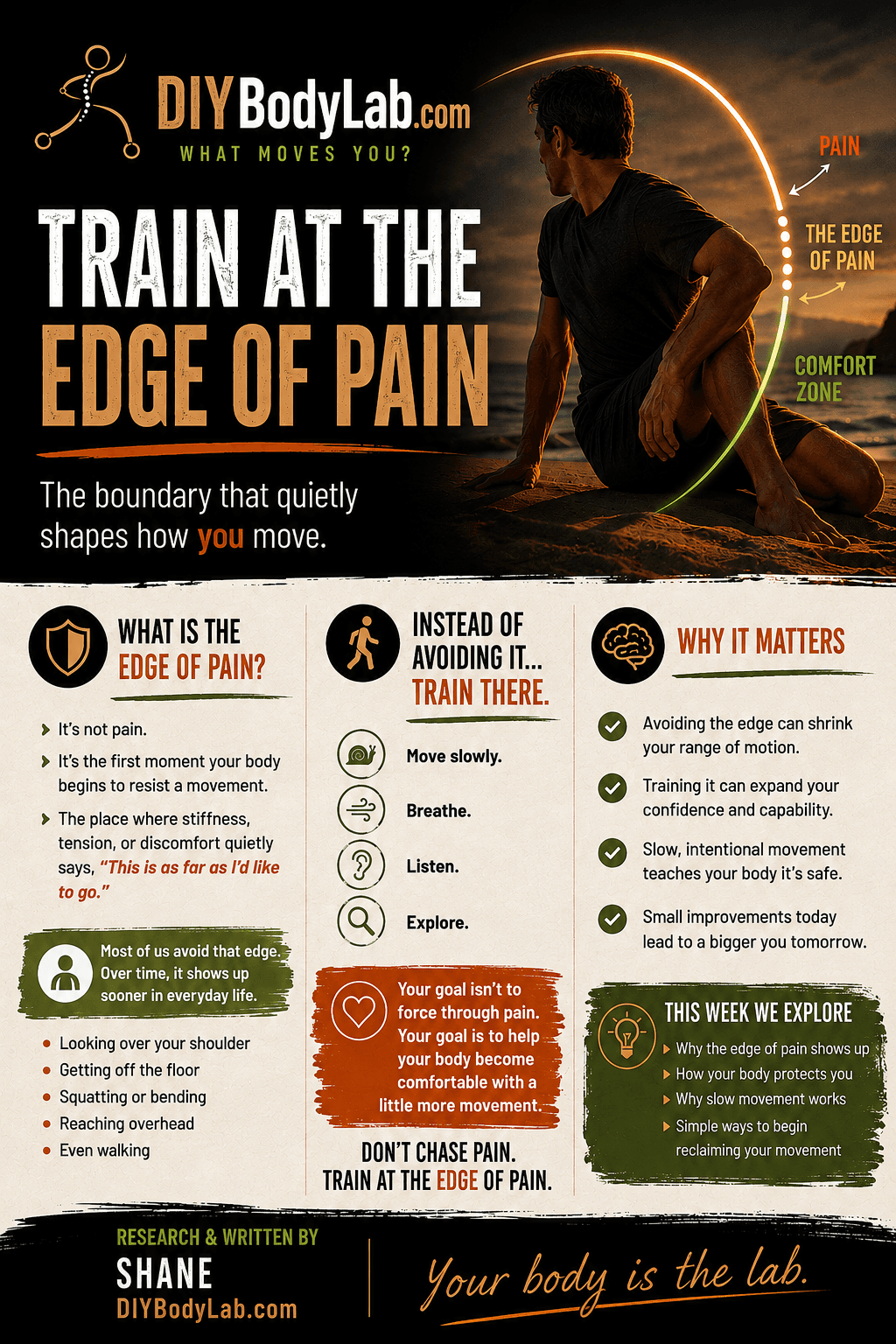
Train at the Edge of Pain
The boundary that quietly shapes how you move. Most people avoid it without noticing — here's what happens when you learn to train there instead.
Read This Week’s Article →Why It Matters Today
Decline is quiet. It doesn’t hit you — it creeps.
Nothing gets better by leaving it alone. Turning your back on where you are today doesn’t make tomorrow show up better. Some things about getting older you can’t control. Strength, mobility, capability — those start with one action today, wherever you’re starting from.
Know Where You Stand
The Mark on the Wall
You don’t notice your body changing day by day — until you finally measure it.
The 5-Test Baseline Assessment is that measure: walk speed, sit-to-stand, getting up off the ground, balance, and grip strength.
Four minutes. No clinic. No fluff. Just a clear starting point.
Take the Assessment →

Ask DIY Body Lab
Got a question? Ask Mobi.
Mobi — Your DIY Body Lab AI Guide
Powered by Anthropic AI
Ask anything about movement, mobility, longevity, or the Touchless system. Answers come straight from the DIY Body Lab library.
The Library — Growing Every Week
Topics worth knowing, right now.
No PDFs or podcast episodes yet — but here’s real ground to start on while the rest gets built.

Movement & Recovery
Train at the Edge of Pain
The boundary that quietly shapes how you move. Most people avoid it without noticing — here's what happens when you learn to train there instead.
Dive Deeper
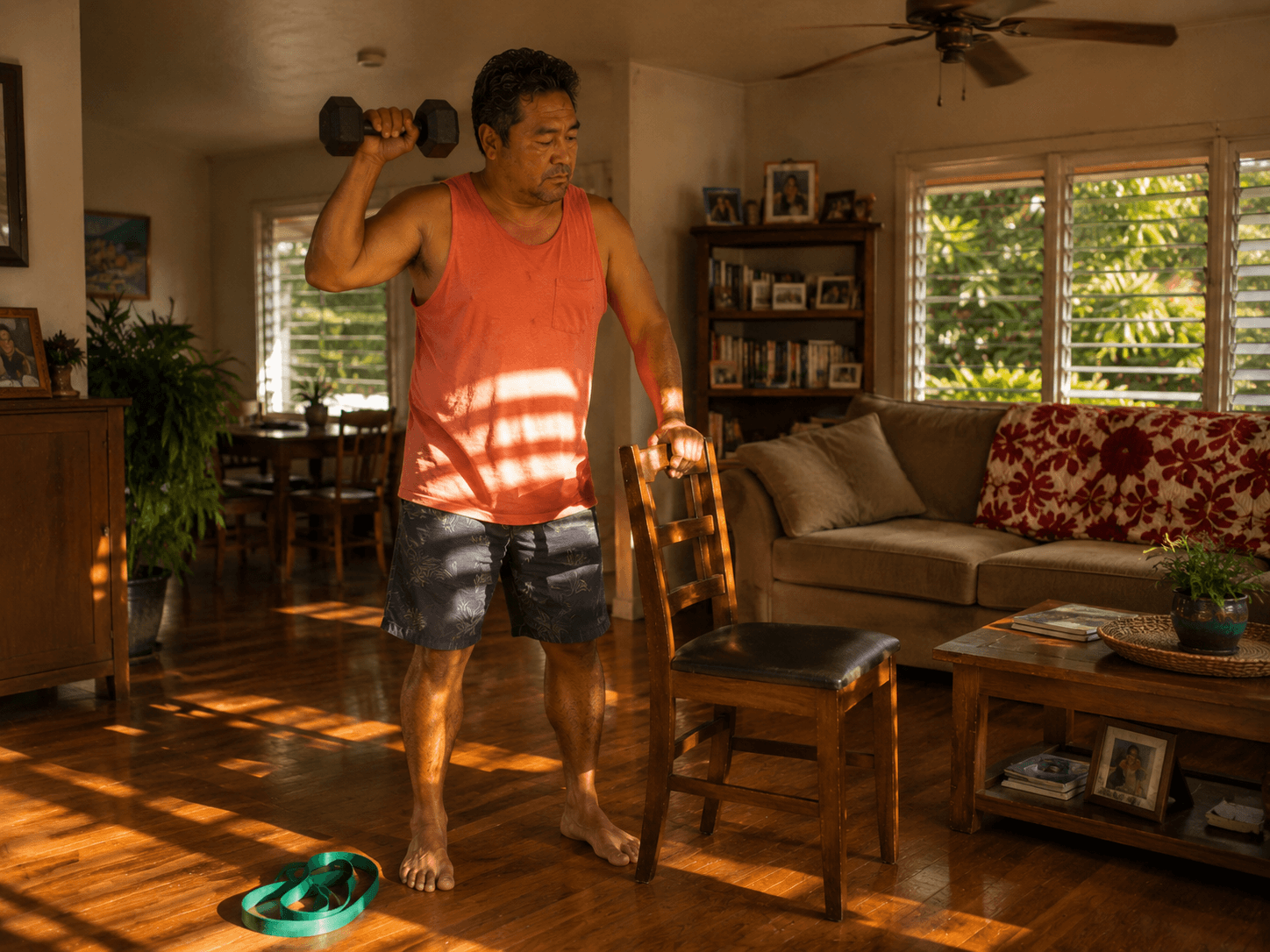
Know Where You Stand
The Reality Check
Most people look up the wrong life expectancy number — and the correction is more useful than the scare. The one number you can measure at home in ninety seconds predicts survival better than a full chart.
Dive Deeper

Mobility vs. Flexibility
Flexibility Is Only the Beginning
You can be flexible on a mat and still lose your balance stepping off a curb. Mobility is flexibility plus control — the difference between touching your toes and catching yourself when you trip.
Dive Deeper

Recovery
Recovery Isn't Just Rest
Sitting still isn't the same as recovering. Real recovery is sleep, nervous-system downtime, and low-effort movement — sometimes that's standing on rocks with a fishing rod, not thinking about anything at all.
Dive Deeper

Capable at Every Age
Built for Everyday Life
Capability is not reserved for athletes. It is carrying groceries, climbing stairs, getting off the ground, keeping up with family, and being ready for the life you want to live.
Dive Deeper

Movement & Capability
Getting Up Off the Ground
One of the most studied movements in the body, and almost nobody practices it. What the research says about why it gets hard, what your sitting-rising score actually means, and why it isn't just flexibility.
Dive Deeper
Cross-System Connection
The Body Is Not a Pile of Parts
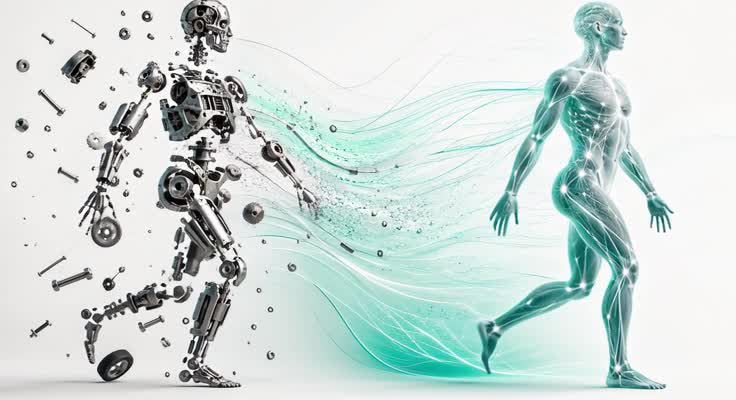
Most of us were taught to look at the body as separate parts — a knee problem, a tight shoulder, a stiff low back, a weak grip. That’s useful for naming a location. It’s a poor map for understanding why the problem is actually there.
Fascia, the nervous system, the muscular system, and the spine are in constant conversation. When one changes, the others usually respond — which is why a change in one place can show up as a feeling of being limited, uneven, or “tugged” somewhere else entirely. Understanding how they work together is what turns anatomy into real capability.
Why the “Body Parts” View Falls Short
The parts-based view treats the body like a machine made of interchangeable components. If something feels wrong, the assumption is that the problem lives in that specific part and can be addressed in isolation. That approach has limits:
- It often ignores how force and tension travel through the body.
- It underestimates how much the nervous system shapes muscle tone and protective patterns.
- It treats fascia as passive wrapping instead of an active, continuous network.
- It can leave people chasing local fixes while the larger pattern stays the same.
A parts-based view is not wrong — it is just incomplete. It is a useful starting zoom level, not the whole picture.
What This Means Practically
When you stop treating the body only as isolated parts, several things become clearer:
- Feeling “tugged” or uneven is often a system-level pattern, not just a local defect.
- Improving movement variety, recovery, and load distribution can change how the whole system feels.
- Local work still matters, but it works better when you understand the larger context it sits inside.
- Capability grows faster when you train and recover the system, not only the individual piece that happens to be complaining today.
This is the shift from “fix the part” to “improve the system’s ability to organize and adapt.”
The Four Systems in Conversation

The goal is not to become an anatomy expert. The goal is to have a practical map that is closer to how the body actually works.
When you can see the connections between fascia, nerves, muscles, and spine, you stop being surprised by the way symptoms travel. You start making better decisions about how you move, how you recover, and how you build capacity over time.
That is the difference between chasing parts and becoming more capable.
Fascia is the continuous web that wraps, separates, and connects nearly everything in the body. It transmits force, carries sensory information, and helps the body stay organized across distance — which is exactly why a restriction in one place can quietly show up somewhere else entirely. It is the web nobody talks about, and it is working in the background of every other system below.
The muscular system generates and controls force. But muscles do not work in isolation — they are embedded in and continuous with fascia, and they only fire when the nervous system tells them to. This is usually the system people think of first when something feels weak, tight, or off. On its own, though, it only ever tells part of the story.
The nervous system is the communication and control layer. It constantly receives input from fascia, muscles, joints, and the environment, then adjusts tone, coordination, and protective responses accordingly. It is, in a very real sense, always listening — deciding moment to moment how much range to allow and how much tension to hold onto, often without you consciously choosing any of it.
The spine is the central structural and neurological pathway — both a load-bearing column and the conduit for major nerve traffic. Changes in how well it moves, or how it’s organized, often ripple outward through the other three systems. It is the structure everything else hangs on, in a fairly literal sense.
None of these systems acts alone. A change in fascial tension can alter the sensory input the nervous system receives. That altered input can change muscle tone. Changed muscle tone can alter how the spine is supported and loaded — and a poorly supported spine changes fascial tension and nerve signaling right back. The loop runs in multiple directions, continuously, whether you are paying attention to it or not.
Application
Touchless Jiu-Jitsu
If you cannot move, you cannot defend yourself.
Most of self-defense never gets to hands. It’s the part before — a body that works, and attention that’s free to notice what’s around you. Shane’s thirty years, applied.

Stay in the Loop
No product. No pitch. Just the good stuff.
New Systems content, real explanations, and things actually worth reading — straight to your inbox. Nothing to buy, nothing to unlock.